New publication Systemic harm, human cost: Documenting anti-trans violence in Eastern Europe and Central Asia
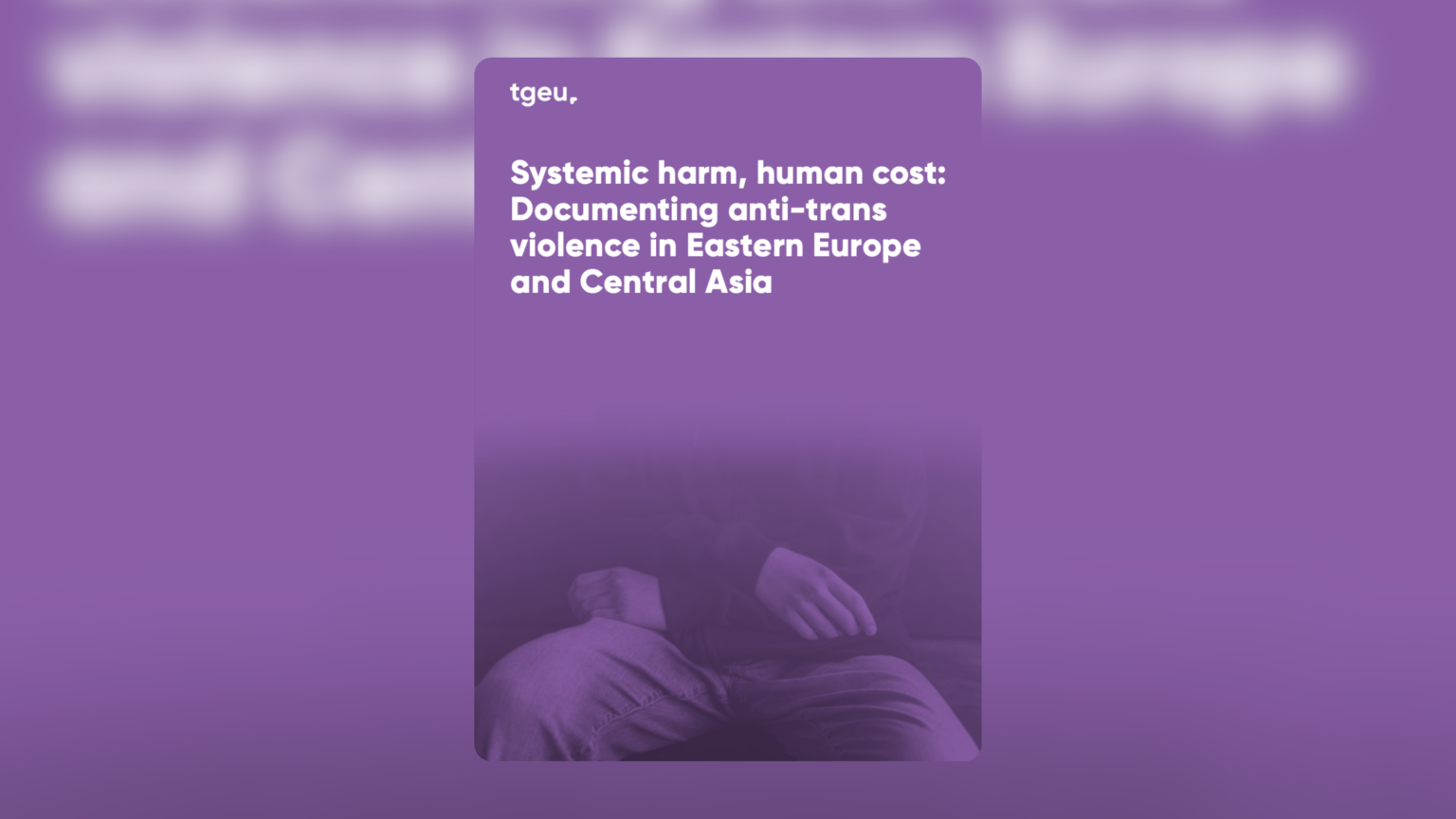
TGEU’s new report, Systemic harm, human cost, shows the scale and reality of anti-trans violence in Eastern Europe and Central Asia (EECA) at a time when political and social conditions for trans people have deteriorated significantly.
War and intensifying anti-gender backlash across the region, combined with discriminatory laws continue to create environments where anti-trans violence is not only possible but encouraged.
How TGEU documented anti-trans violence in EECA
The report documents 88 cases of anti-trans violence reported between 2019 and 2023 across 12 countries in EECA. The data was collected through a community-led documentation process, working closely with trans organisations and activists across the region. Given the emotional impact of this work, collaborators were offered peer and professional mental health support throughout the research.
Key information on anti-trans violence in EECA
The findings show that anti-trans violence is overwhelmingly systemic. Survivors experience several forms of harm, such as psychological, physical, emotional, and institutional, often repeatedly and in many areas of their lives. Law enforcement officials and family members are the most commonly identified perpetrators, highlighting a serious lack of both formal and informal protection for trans people in the region. Discriminatory laws, public hate speech, and media outing all contribute to ongoing and further harm.
Disproportionate impact on marginalised groups
The report also identifies clear patterns of disproportionate impact. Trans women and transfeminine people, trans sex workers, migrants, and unemployed trans people face the highest levels of violence. Many survivors avoid police and health services out of fear and when they do seek help, responses often range from indifference to active violence.
Urgent call for structural and community-centred action
Throughout the region, trans communities remain the most reliable source of safety and support. The report calls for urgent action to centre community knowledge, strengthen protection systems, and challenge the laws and policies that perpetuate anti-trans violence in EECA.
Recommendations to counter anti-trans violence in EECA
The report includes a range of recommendations for governments, international human rights bodies, civil society, and funders. Read the detailed recommendations below:
To states
Repeal discriminatory laws and end persecution.
States must repeal laws that criminalise same-sex relationships, HIV transmission, and restrict the work of LGBTI organisations under the pretext of ‘propaganda’ or ‘foreign influence.’ Sex work must be fully decriminalised, and sex workers must be protected from violence and provided with decent working conditions. Trans people must have easy and safe access to legal gender recognition and necessary medical care.
Trans people must be protected from discrimination.
Laws are needed that explicitly prohibit discrimination on the basis of gender identity and gender expression. These guarantees must be effective in practice — in hospitals, schools, at work, when renting accommodation and when accessing public services.
End violence by state institutions.
Independent mechanisms must be created to monitor the actions of the police and officials. Cases of abuse — including forced examinations, blackmail and extortion — must be investigated and punished. Trans people who have experienced violence must have access to safe ways of filing complaints and psychological support that are independent of the police.
To international human rights bodies
• Monitor states’ compliance: Hold states accountable to international human rights standards for trans people and expose violations, including criminalisation, lack of legal gender recognition, and barriers to healthcare.
• Promote human rights protections: Set clear international guidance on anti-discrimination, inclusive healthcare, and protection for trans people, especially sex workers, migrants, and asylum seekers.
• Support capacity building: Support institutions and civil society with training and technical support to address violence against trans people, particularly those facing intersecting marginalisation.
To civil society
• Support trans community organising: Work in partnership with trans-led organisations and ensure their meaningful involvement in human rights and anti-violence work.
• Strengthen community-based support: Develop safe, non-police-based support services for trans survivors of violence, including crisis response, counselling, and legal support.
• Monitor and document violations: Collect data on violence and discrimination to hold states accountable and inform international human rights bodies.
To funders
• Invest in community-led solutions: Prioritise long-term, flexible funding for trans-led organisations offering peer support, crisis response, advocacy, and legal aid.
• Support structural change: Fund initiatives that address systemic discrimination in justice, healthcare, employment, and education, not only emergency responses.
• Resource underrepresented groups: Ensure funding reaches trans people facing intersecting marginalisations such as trans women and transfeminine people, migrants and refugees, sex workers, people of colour, and disabled trans people.
Your support makes change possible
We work across Europe and Central Asia to advance trans rights, build strong communities, and drive change through research, advocacy, and community-building.
Your donation helps us continue this vital work — defending trans lives, amplifying trans voices, and advocating for justice every day.