Trans activists and stakeholders gather at TGEU’s Pre-Council to advance trans rights in Eastern Europe and Central Asia
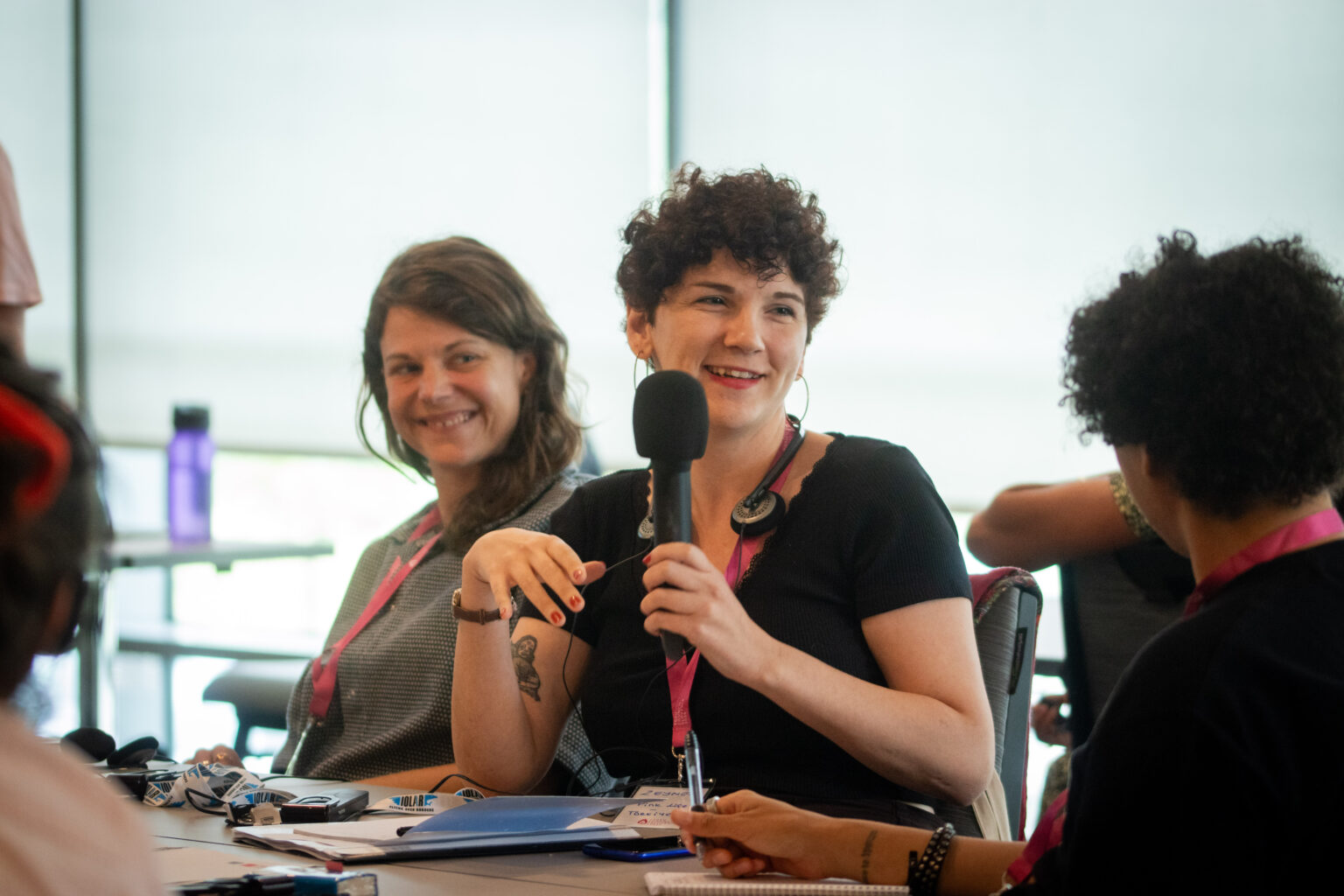
On 9-10 September in Ljubljana, Slovenia, 27 trans activists from Eastern Europe and Central Asia (EECA) and international stakeholders came together to ask one question: how do we protect trans people in a region where democracy and human rights are deteriorating?
The second TGEU Pre-Council Strategic Meeting on Trans Rights in EECA took place ahead of TGEU’s 10th European and Central Asian Trans Council. Over two days, participants analysed the rapidly changing political and legal environment, exchanged lessons learned, and explored ways to strengthen cooperation, joint advocacy and coordinated action.
The Strategic Meeting brought together three groups with different but complementary types of expertise and mandates:
- EECA trans activists with direct experience working with communities and conducting national advocacy
- International stakeholders working on human rights and the rule of law
- Allied movement leaders engaged in human rights protection.
Together, they aimed to build a shared understanding of key challenges and possible responses, identify political and legal leverage points for 2026–2027, and strengthen trust and cooperation.

Key takeaways
- Participants shared strategies for responding to anti-trans policies.
- They explored practical approaches to depathologisation and healthcare, and how strategic litigation can drive wider legal and social change.
- TGEU will follow up on the priorities, requests and commitments that emerged, including by connecting participants with international organisations.
The Pre-Council was intended not as a stand-alone meeting, but as a point for continued exchange and action.
A region under pressure
Across EECA, trans people are being used as scapegoats to reinforce authoritarian power and control. Trans people are portrayed as a threat to ‘national identity and values’ or ‘women and children’ within a broader and increasingly coordinated anti-gender discourse.
Pressure from authoritarian states and anti-gender forces is growing alongside:
- Laws and policies that increasingly target civil society
- War and armed conflict
- Cuts to funding for civil society programmes
- Increasingly unsafe conditions for trans human rights defenders
- Limited opportunities to protect rights through national and international human rights mechanisms

Transforming exchange into action
Rather than simply sharing information, the meeting focused on turning shared experiences into action.
Participants discussed specific examples from different countries, exchanged tried-and-tested strategies, and learned more about the work of the Council of Europe, the OHCHR, the UN Human Rights Committee, and international human rights organisations. They examined examples of solidarity with other civil society movements and explored practical approaches to improving healthcare for trans people and strengthening their autonomy, including the role of ICD-11 and WPATH standards.
They also mapped alliances, explored the potential of strategic litigation, identified concrete opportunities for collaboration, and had a forum where various actors could ask questions and get practical answers.
The discussions strengthened a sense of regional solidarity and created a space for new partnerships and commitments to emerge.
What happens next
In the coming months, TGEU will stay in contact with participants and support follow-up on the priorities, requests and commitments that emerged during the discussions.
This will include facilitating connections between participants and relevant branches of international organisations interested in further collaboration, including opportunities for strategic litigation.
TGEU will also continue to monitor cross-sectoral and international health-related initiatives and processes to identify relevant developments early and connect EECA activists with stakeholders in advance, so they can engage strategically and contribute their perspectives.
Your support makes change possible
We work across Europe and Central Asia to advance trans rights, build strong communities, and drive change through research, advocacy, and community-building.
Your donation helps us continue this vital work — defending trans lives, amplifying trans voices, and advocating for justice every day.